 This is Johanna Rothman’s July 2026 Pragmatic Manager Newsletter. The Unsubscribe link is at the bottom of this newsletter. (Looking for the video? I post the video within a few days of publication on my YouTube channel.)
Are you drowning in work? While I mostly speak with project and program managers, or “people” managers, everyone seems to have the same problem: too much to do and too little time to do it. As a result, too few people can focus on what they need to do, first, second, and then, third.
What do you do when your boss asks you to do more, especially now that AI can supposedly “help” you to do more? Consider these three tips as you claw your way out of too much work to focus on one thing at a time.
Tip #1: Draw a Kanban Board
When I feel overwhelmed, I realize I have let my kanban board get away from me. Yes, I am human, so sometimes I overload my kanban board. However, the board helps me see what I’m supposed to finish now, what’s next, and where I might be waiting for people to get back to me. (See Visualize Your Work So You Can Say No to see two examples of personal kanban boards.) Because those boards are based on my personal experience, they might not work for you.
When I speak with project and program managers, they say their bosses think AI can help them do “more” work.
In this case, their bosses are partially correct. AI can absolutely help by taking all your work and generating a kanban board just for you. In addition, AI can do what I call useless project and program work, such as generating or updating GANTT charts. Or updating the various task boards.
Here’s a quick project/program tip: If the humans do not update the task boards, that’s a signal that there is a problem with the task size or the lack of collaboration. I’ll write a larger tip about that in the future.
You do not need to use a kanban board, or ask AI to help you generate your personal board. You might choose to visualize the work differently. But I like a kanban board because that visualization allows me to have a conversation with the person who is asking for more: “I am just one person. What one thing do you want me to do, and for how long?”
Humans can only focus on one thing, and only one thing, at a time. There is a cost when we try to “focus” on more.
Tip #2: Explain the Cost of Not Focusing with the Cost of Delay
I’ve explained the costs of multitasking in several posts. (See How Multitasking Affects Capitalization and What You Can Try Instead for a recent post related to management. Also, see this previous newsletter: Three Secrets to Manage Multitasking Even When More Senior People Insist.)
But I’ve had more success recently when I discuss the Cost of Delay. (See How to Calculate the Cost of Delay to Rank All the Work, Part 1 for the series.)
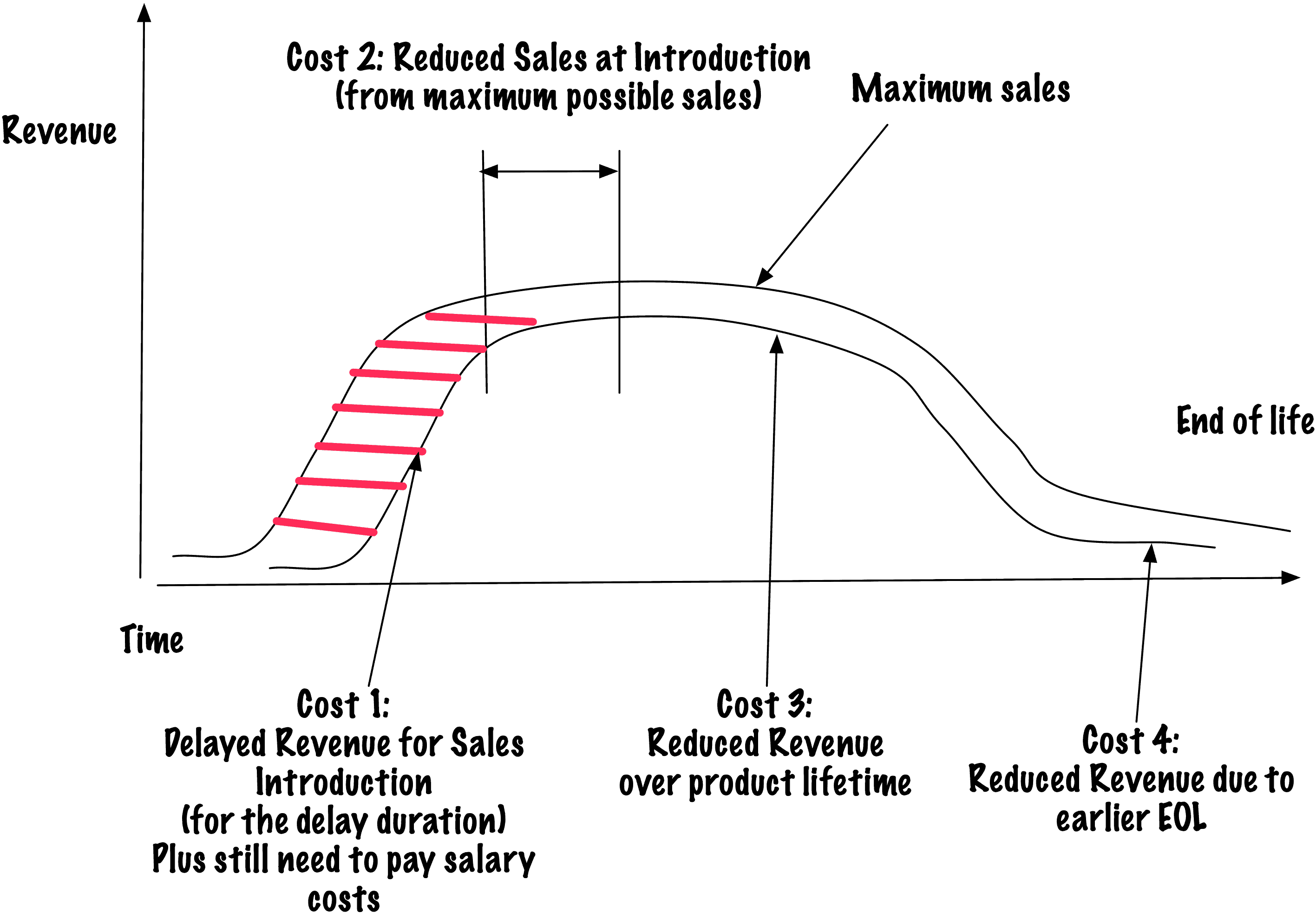
Notice that there are four separate costs. Most senior leaders don’t need to see more than the first two costs before they realize they want to ask the teams to focus on one thing at a time. That focusing allows the organization to bring in more revenue (or your surrogate for revenue) faster.
Remember, you do not have to try to calculate each Cost of Delay. The first two delays are relatively easy to calculate. The other two are more iffy for me because they depend on so many unknowns. However, this is where you can use your local AI to calculate the various costs of delay, using your own scenarios from previous releases. That’s the kind of thing I would never take the time to do. And if you ask the AI to check its work, it might give you the right calculations. Remember: the LLMs still hallucinate, especially with data. That’s why I recommend you ask your LLM to build checking into its work.
Cost of Delay is only one of the consequences. Stories might offer even more insight into your data.
Tip #3: Use Stories to Clarify the Customer Consequences of Lack of Focus
Some people do not relate to either the kanban board visualization or the Cost of Delay data. That’s okay. Those people often relate to customer-based stories instead.
Here’s how you might frame a customer-based story: “We started this project focused on Customer Segment A because we kept hearing from them. Now, we added Customer Segment B, but we’ve heard nothing from them. Not a peep. In the meantime, we’re behind on what we wanted to deliver to Customer Segment A. Not only are they calling Customer Success, but some of the loudest people are threatening to go with our major competitor. How do you feel about Customer Segments A and B? Which is really more important?”
Once people hear that story, they might ask for more data, such as the number of Customer Success calls, or which customers, or even the customer churn data. (Consider the Pirate Metrics as a start.) You might need more data to support your concerns, but that’s how a story can help your boss understand the customer-focused consequences.
Whatever you do, you do not need to drown in work.
Say No and Stop Drowning
All of these ways to choose a single focus are ways you can say no to some of your current work and more work. This is why fast and frequent management decisions matter so much. These decisions help managers choose that focus for a project, program, and portfolio. Or any other important work.
Choose your single focus—with or without—the help of your manager. That single focus will allow you to finish in a shorter time than trying to do “everything” at once. (See Flow Metrics and Why They Matter to Teams and Managers for more details.)
While No is a complete sentence, consider building your influence with other explanations. Those explanations can include your kanban board, the Cost of Delay, and stories. You might even have more options. But no one succeeds when anyone drowns in too much work. Make your work possible. That will make it more likely to succeed.
Read More…
This newsletter touches on ideas in these books:
- Manage Your Project Portfolio: Increase Your Capacity and Finish More Projects
- All three of the Modern Management Made Easy books
- Project Lifecycles: How to Reduce Risks, Release Successful Products, and Increase Agility
- Effective Public Speaking: How to Use Content Marketing With Stories to Show Your Value
Announcements
I am happy to report that Effective Public Speaking: How to Use Content Marketing With Stories to Show Your Value is available on my store in ebook and audio. (The audio will only be available on my store.) I have also distributed the ebook and print books to all the usual stores.
Links of Interest
New to the newsletter? See previous issues. (I post these newsletters to my YouTube Channel a few days after I send them.)
Here are other links you might find useful:
- Managing Product Development Blog. (Yes, I offer an RSS feed so you can read everything in a newsreader.)
- Create an Adaptable Life Blog to see the weekly question of the week.
- My Books. You can also buy my self-published ebooks and audiobooks on my store.
- Johanna’s Fiction
- Tip Jar. (My newsletters will remain free. And I do want to offer you an option for you to show how much you value my work.)
Johanna
© 2026 Johanna Rothman
Pragmatic Manager: Vol 23, #7. ISSN: 2164-1196